Curious Kids · Lesson 11 of 12
Learning With AI
AI can help you understand things, but your brain does the learning. You do the thinking and the work.
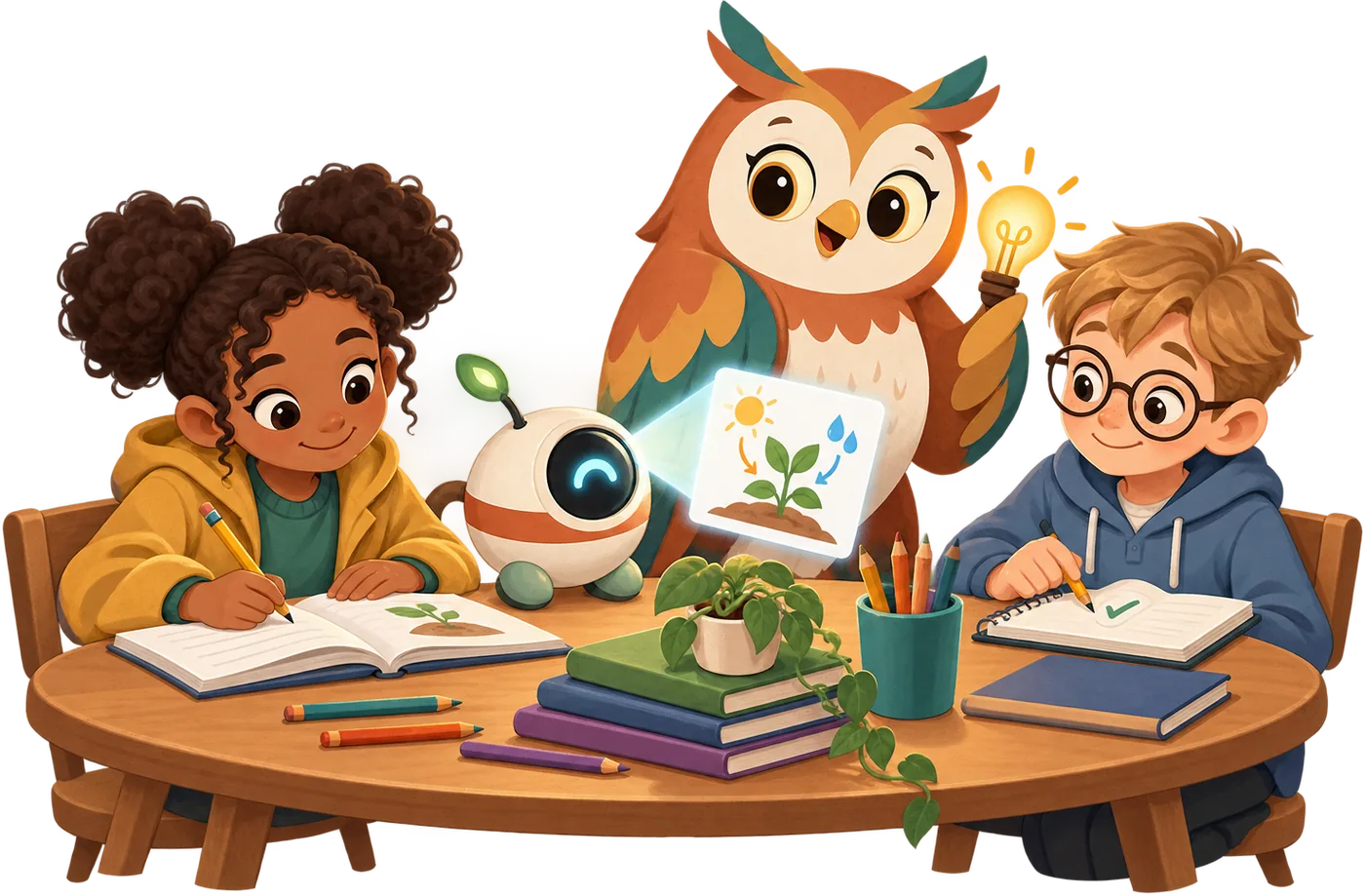
Your device reads the story out loud.
 Sticker waiting for you
Safety tip: Follow your school's rules about AI, and ask if you're not sure. · Pip is a pretend AI, for practice
Story time
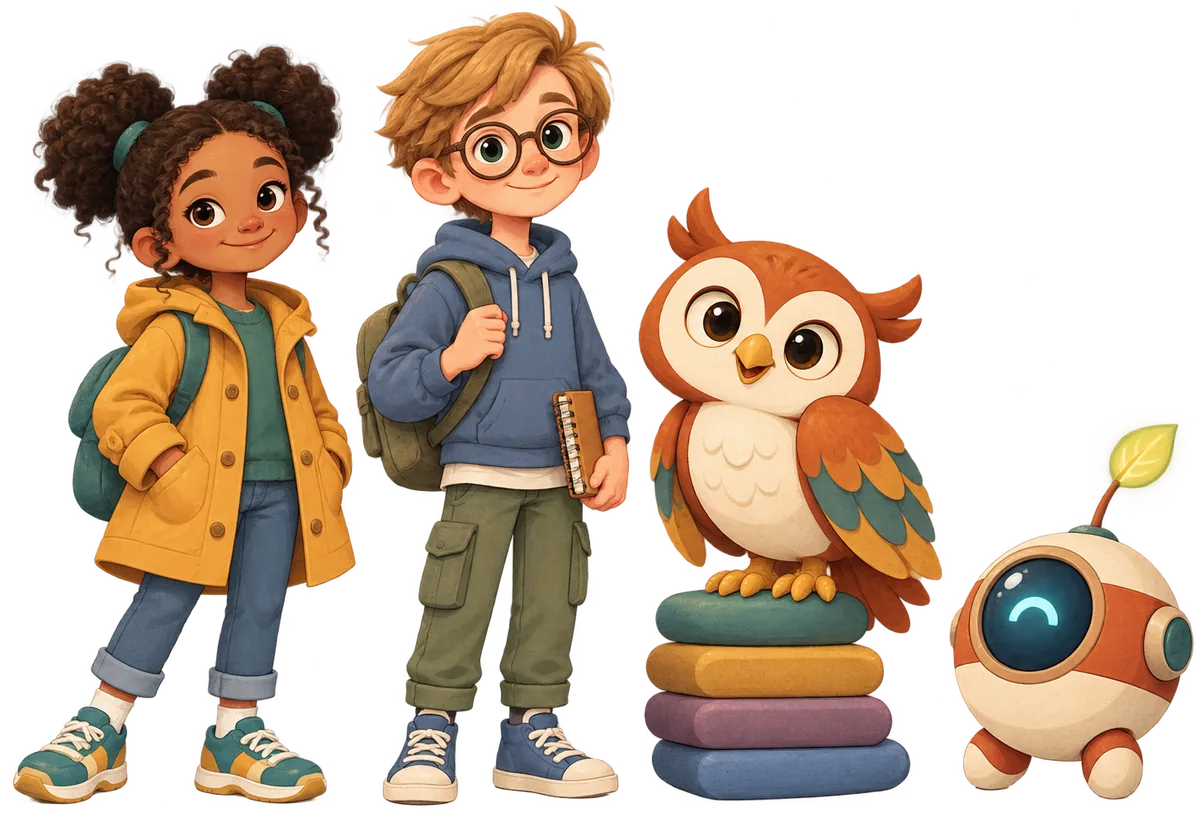
NarratorNoor had homework: explain how plants grow. It was due tomorrow.
NoorPip, can you just write it for me? Please?

PipBeep! Done! Two whole pages about plants!
NoorPhoto... synth... what? I don't understand a word of this.
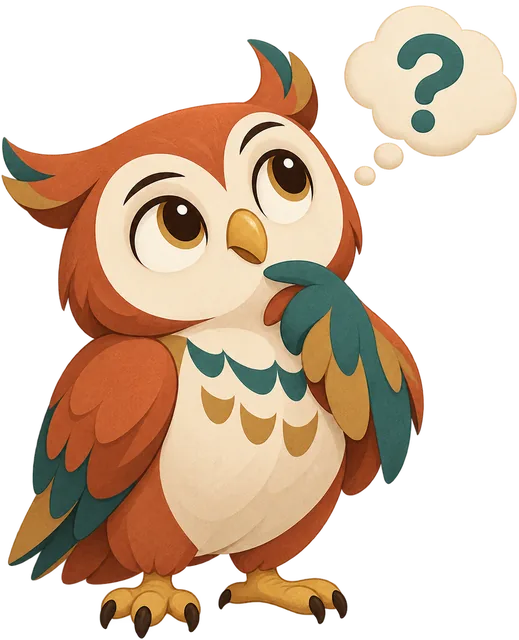
OwlHoo. If Pip does your homework, who learns about plants?
NoorPip does. And Pip doesn't even have a brain!
TheoAnd tomorrow your teacher will ask you questions, not Pip.
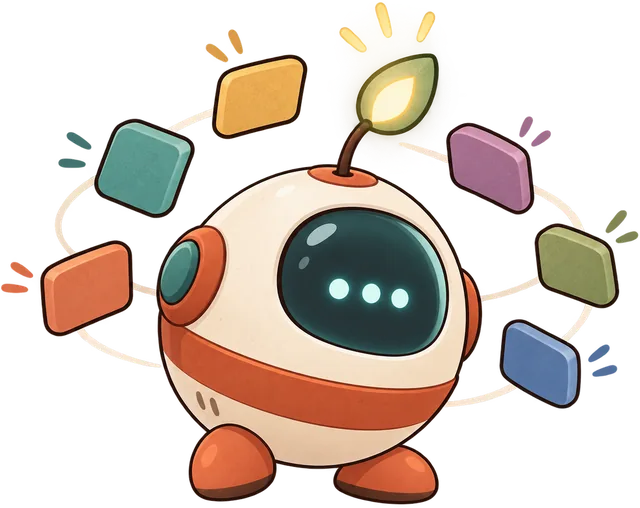
NoorPip, can you explain how plants grow, like I'm nine?
PipPlants use sunlight, water, and air to make their own food. It's like cooking with sunshine!
NoorOh! Now I get it. I'll write it myself.
Your brain needs the workout
Learning is like exercise for your brain. It gets stronger when it does the work.
If AI does your homework, AI does the workout. Your brain stays on the sofa!
Homework is practice. The thinking you do matters more than the answer.
Ask AI to explain. Then do the work yourself.
Good ways to ask for help
Some questions ask AI to do the job for you. Others ask it to help you learn.
"Write my story" asks AI to do the job. "Give me three ideas for a dragon story" helps you think.
And always follow your school's rules. Some teachers say no AI for homework. Ask if you're not sure.
Good help questions ask AI to explain, give ideas, or check you understand.
Try it: Explain it back

Do this with a grown-up. A game for after homework.
- Pick one thing you learned today.
- Explain it to your grown-up in your own words, like a teacher.
- Your grown-up asks you one question about it. Can you answer?
- Swap! Now your grown-up explains something to you.
If you can explain it, you really learned it.
Optional. Just for fun.
Check it, and earn your sticker
 Word jar
 For grown-ups
What your child learned
AI can be a patient explainer, but learning happens when the child does the thinking. Good uses: explaining, giving ideas, asking check questions. Poor uses: doing the work. School rules about AI come first.
Talk about it
- What's something you understand much better because you worked it out yourself?
- When would it be OK to ask AI for help with homework, and when not?
- What are your school's rules about AI? Shall we find out together?
A five-minute activity
After homework, ask your child to explain one thing they learned back to you in their own words, then ask one follow-up question. If they can answer it, they learned it.
Safety notes
Most AI tools have a minimum age, often 13 or older, so younger children shouldn't use them for homework on their own. Check your child's school policy: many schools set rules about AI for homework and coursework.
If this worries your child
If your child already used AI for homework and feels bad about it, stay calm: thank them for telling you, talk about what they could learn next time, and if needed help them tell their teacher. The lesson is honesty, not punishment.
Curious Kids has no accounts and collects nothing: progress and stickers stay on this device. More in the grown-ups guide.