Curious Kids · Lesson 10 of 12
Is AI Fair?
AI learns from examples. If the examples leave some people or things out, AI can be unfair to them.
Your device reads the story out loud.
 Sticker waiting for you
Safety tip: If AI leaves someone out, say so and tell a grown-up. · Pip is a pretend AI, for practice
Story time
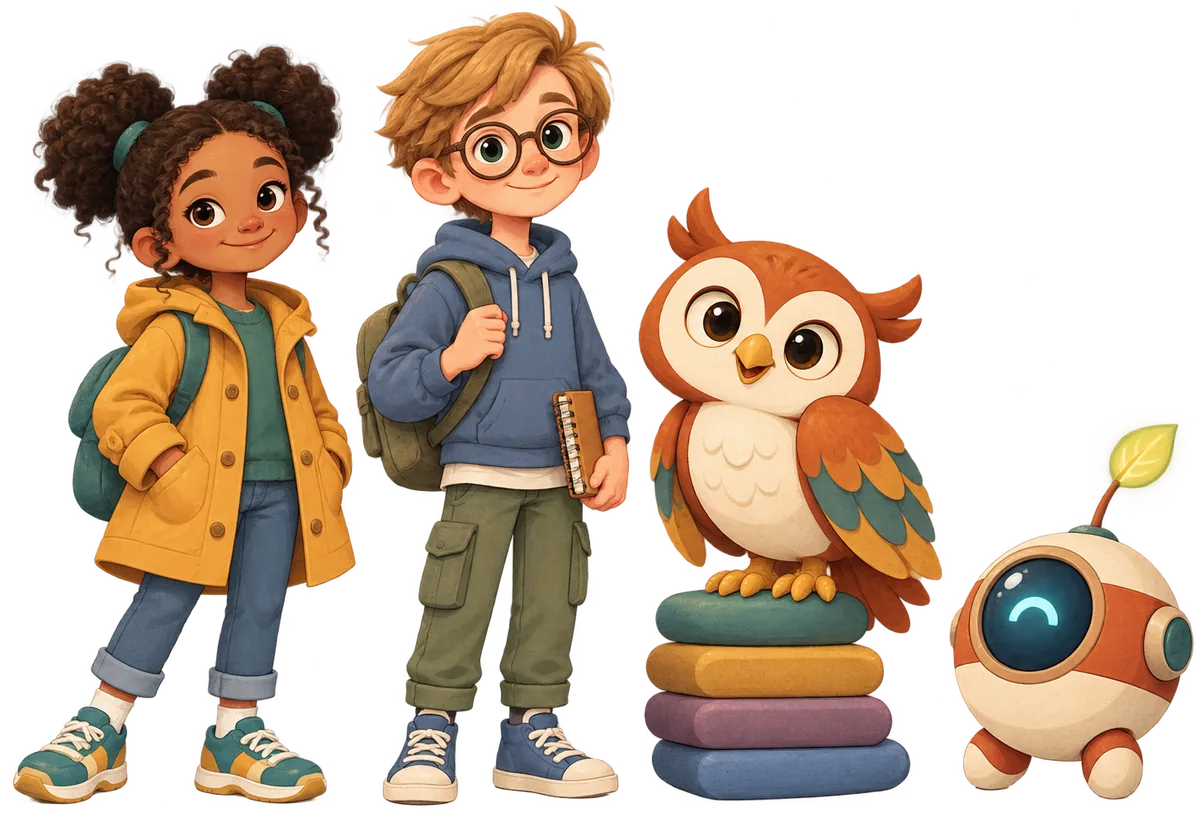
NarratorGrandad Joe had a big box of old shoes for the school jumble sale. They needed sorting.
TheoPip can help! I'll teach it what a shoe looks like.
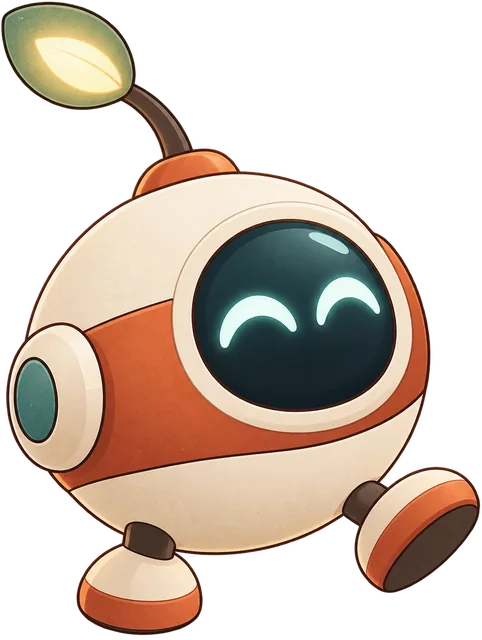
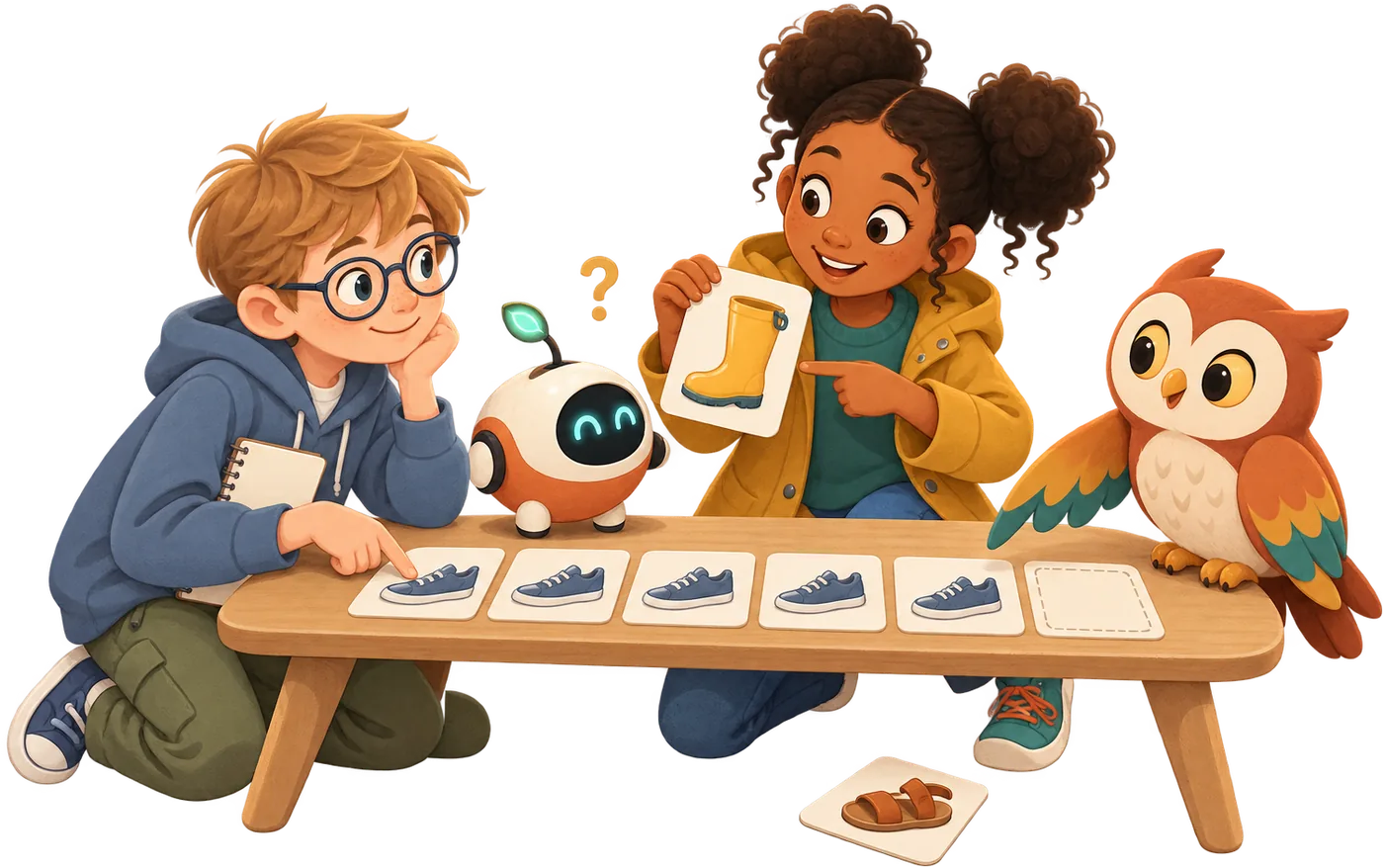
NarratorTheo showed Pip five pictures of shoes. Every single one was a sneaker.
PipBeep! I know shoes now. Shoes are blue, with laces!
NoorWhat about my rain boots?
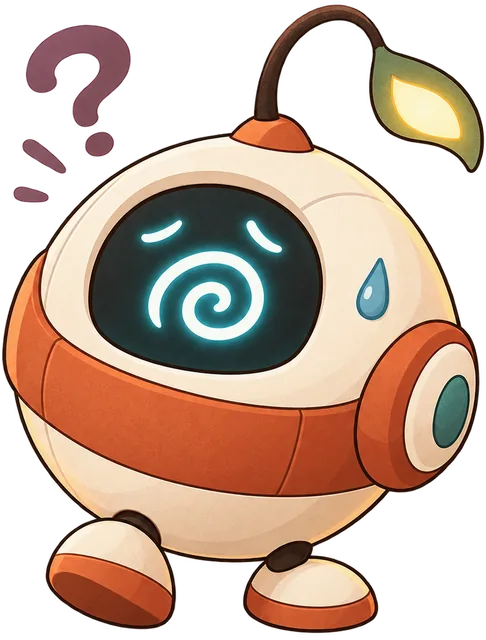
PipNot a shoe! No laces. Into the not-shoe pile!
NoorAnd Grandma's sandals?
PipNot a shoe either. Too many holes. Beep?
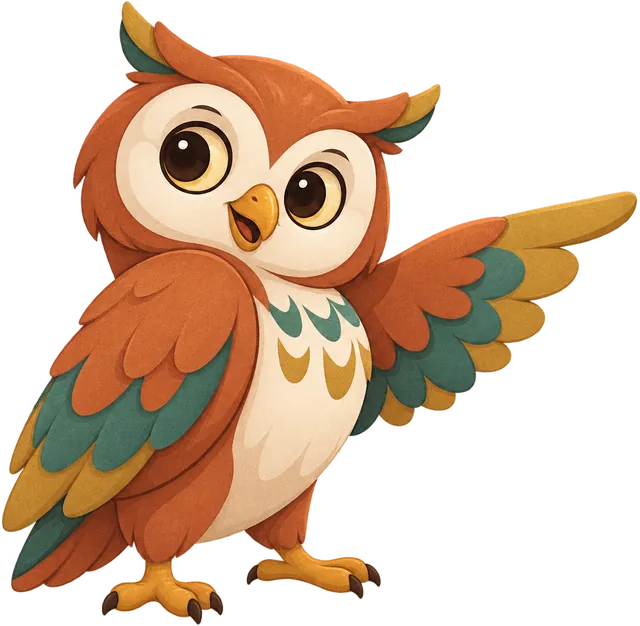
OwlHoo! Pip isn't being mean. It only knows what it was shown.
OwlWhen examples leave things out, AI can be unfair to them. That's called bias.
TheoSo we need lots of different shoes in the examples!
Missing examples
Pip only saw sneakers. So Pip decided that only sneakers are shoes.
That isn't fair to boots and sandals. They are shoes too!
Real AI learns from examples in the same way. If some people or things are missing from the examples, AI can get them wrong.
If the examples leave things out, AI can get those things wrong.
Fair to everyone
Being fair means treating everyone well, not just some people.
AI does big jobs, like understanding voices or sorting photos. If it only learned from some people, it may not work well for others.
The people who make AI try to fix this with better examples. You can help too. If AI leaves someone out, say so.
Fair AI learns from all kinds of examples, so it works for everyone.
Try it: The missing picture game
No screens needed. A drawing game for two or more players.
- One player picks a group, like birds, and draws three examples that look a bit the same.
- The other player draws one that belongs to the group but looks very different. A penguin is still a bird!
- Talk about it. What did the first three pictures leave out?
Try it with dogs, houses, hats, or fruit.
Optional. Just for fun.
Check it, and earn your sticker
 Word jar
 For grown-ups
What your child learned
AI learns from examples. When some groups are missing or rare in those examples, the AI can work worse for them: that is one source of bias. Fairer AI needs varied examples and testing with many kinds of people.
Talk about it
- Can you think of a time something didn't work as well for you as for someone else, like a game, a pair of gloves, or a voice helper?
- Why do you think Pip decided a rain boot wasn't a shoe?
- If you built an AI, what examples would you give it so it works for everyone?
A five-minute activity
Pick a group together (birds, fruit, or houses) and list examples until you include some surprising ones, like penguins, starfruit, or houseboats. Talk about which ones a quick guess would miss.
Safety notes
Children can hear 'AI is unfair' as 'AI is bad'. The helpful message is narrower: AI reflects its examples, people can improve it, and it's always fine to speak up when something leaves people out.
If this worries your child
If your child noticed a tool or game treating them or someone they know unfairly, take it seriously and listen. Explain that it's a flaw in how the tool was made, not something wrong with them, and that reporting it helps get it fixed.
Curious Kids has no accounts and collects nothing: progress and stickers stay on this device. More in the grown-ups guide.