Curious Kids · Lesson 8 of 12
Creating With AI
AI can help you make stories and pictures. Your own ideas matter most, and it's honest to say when AI helped.
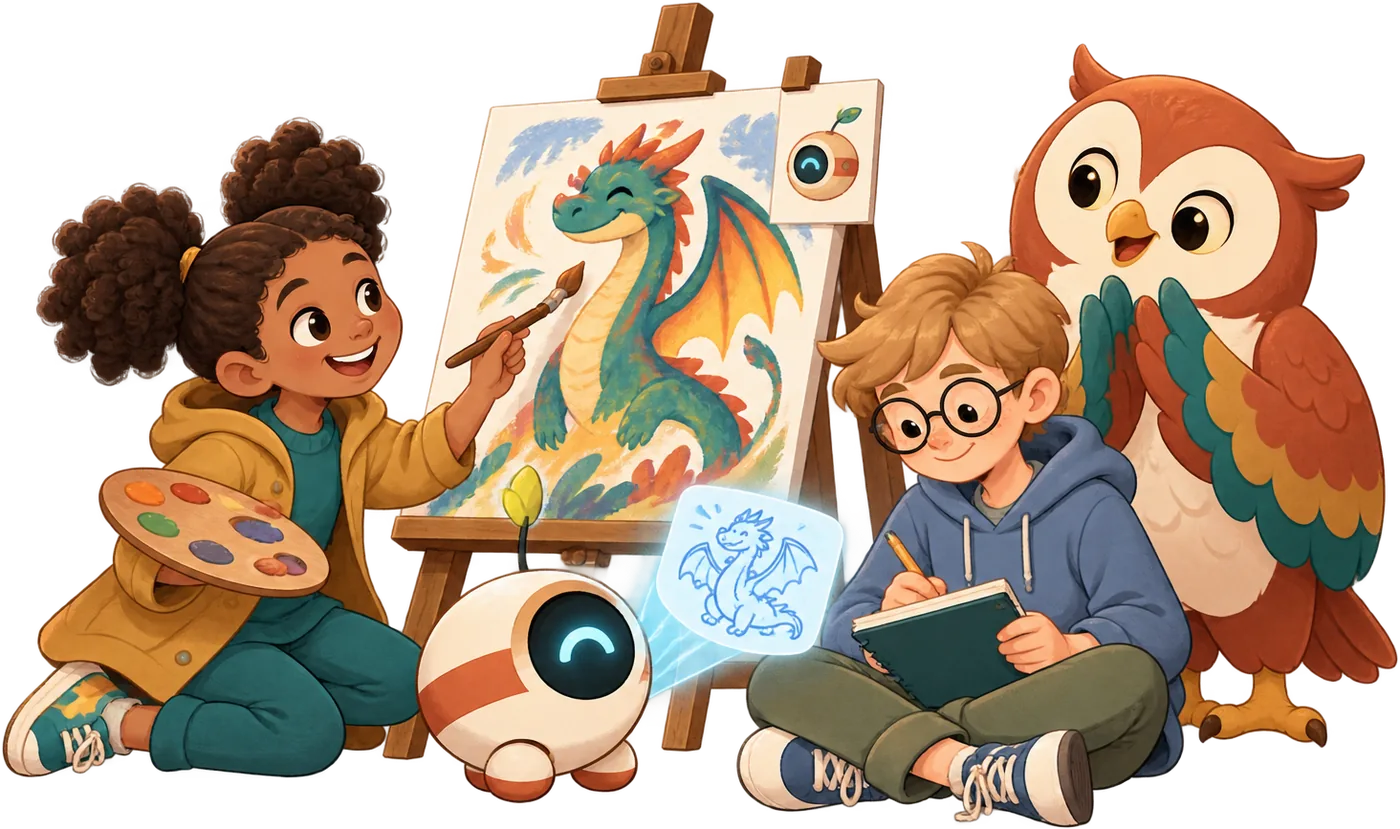
Your device reads the story out loud.
 Sticker waiting for you
Safety tip: Be honest about AI help. · Pip is a pretend AI, for practice
Story time
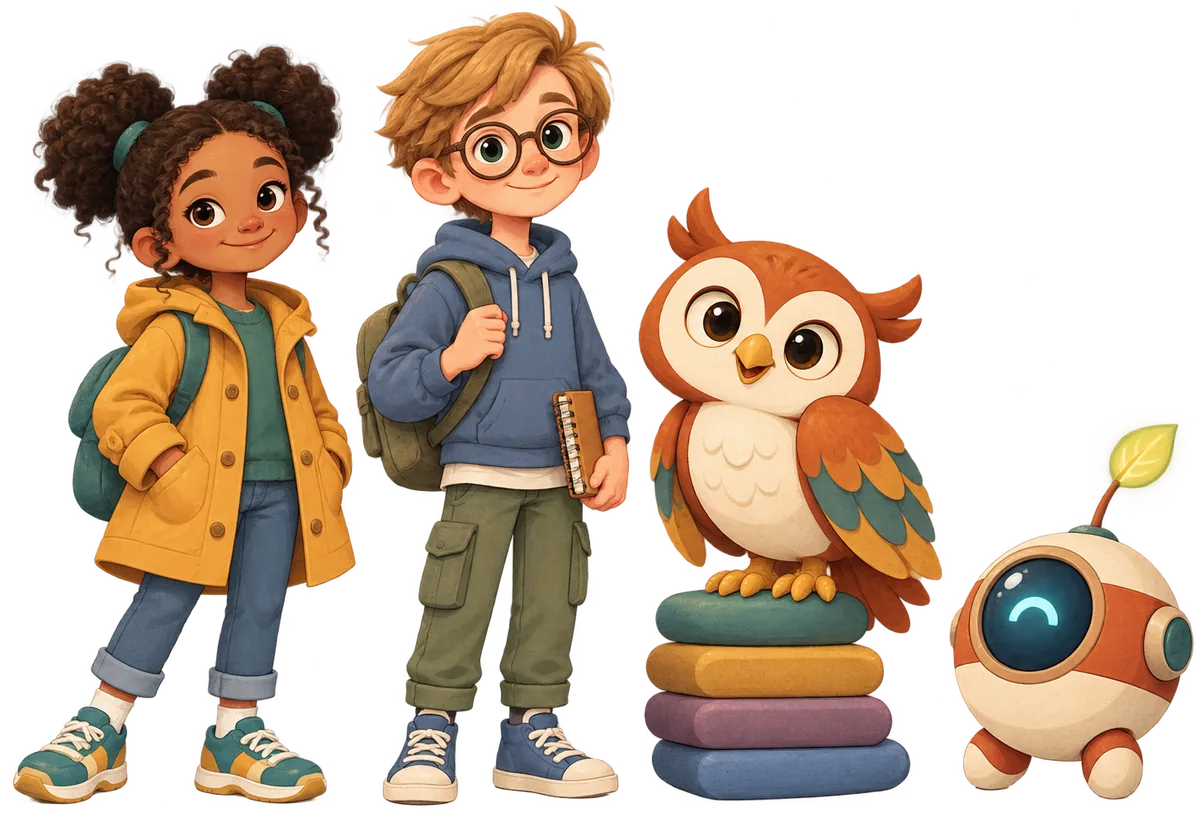
NarratorNoor had a job for school: make a comic. She had paper and pencils. She did not have an idea.
NoorPip, I'm stuck. Can you help me think?
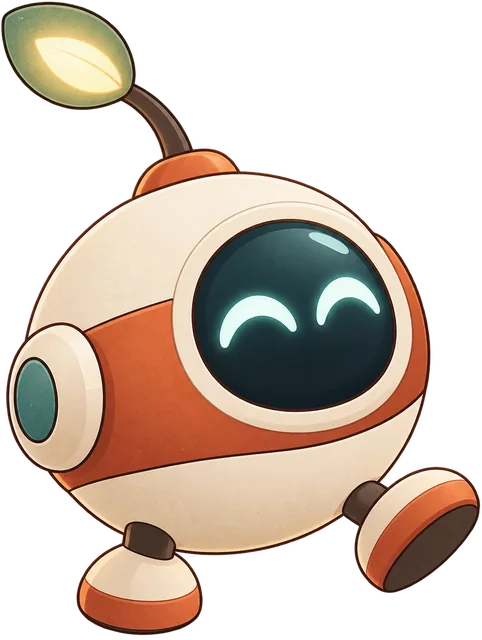
PipBeep! Here are three ideas. A snail who wants to win a race. A cloud who sneezes rain. A sock who runs away from the washing machine.
NoorThe snail! But I'll make it my way. She'll have a tiny skateboard.
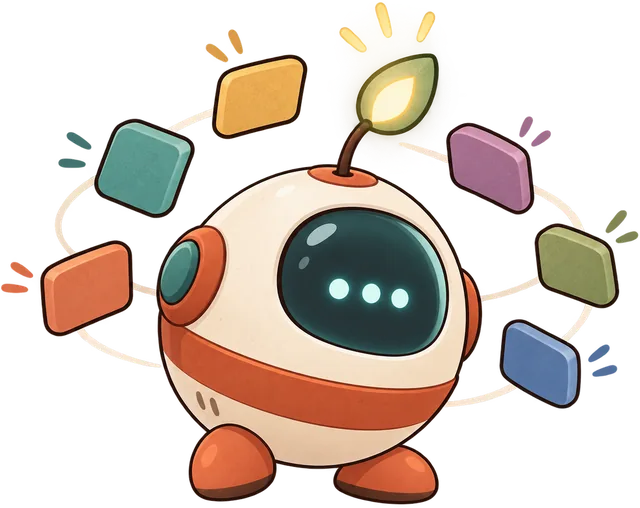
TheoPip, write my story homework for me. I'll say I wrote it. Nobody will know!
PipI can write a story. But is saying you wrote it the honest thing to do?
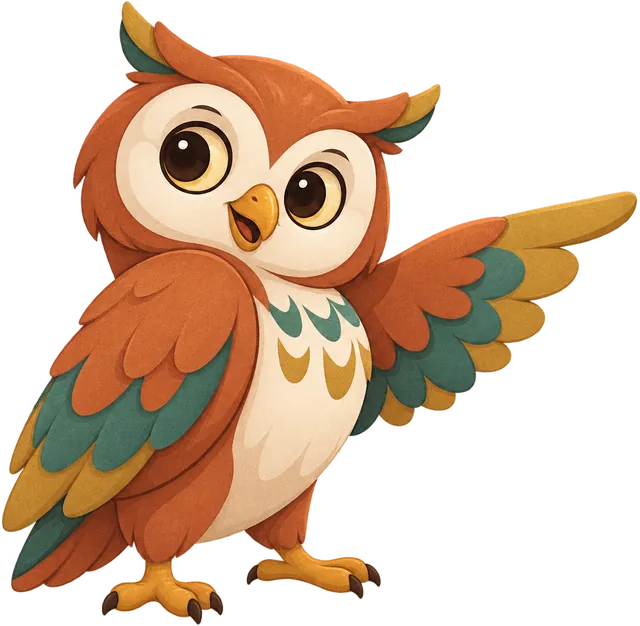
OwlHoo! AI can help you create. But your own ideas matter most. And it's honest to say when AI helped.
OwlFor homework, your teacher sets the rules. Ask them what help is allowed.
TheoHmm. My teacher wants to see what I can do. I'll write it myself, and ask about Pip.
NarratorNoor drew every picture herself. On the back she wrote: Pip helped with ideas.
NoorThe snail is mine. Pip just helped me get started.
Be honest about AI help
AI can help you make things. It can suggest ideas, names, or rhymes. Pip is a pretend AI, but real ones can do this too.
If AI helped, say so. That's being honest. It means telling the truth, even when nobody would find out.
For homework, your teacher sets the rules. Some teachers say no AI help. Some say ideas are fine. If you're not sure, ask.
Follow your teacher's rules, do your own work, and say how AI helped.
Your ideas matter most
When you create something, you make something new. A drawing, a story, a song.
Pip can help a little, like a friend who gives you a tip. But you choose, you draw, and you decide.
Giving credit means saying who helped. Noor wrote “Pip helped with ideas” on the back. Now everyone knows who did what.
You're the boss of what you make. Give credit to anyone, or anything, that helped.
Try it: Draw and compare
No screens needed. A drawing game for two or more people. Every drawing will be different, and that's the point.
- Pick a short description. For example: a cat in a hat on a rainy day.
- Everyone draws it for three minutes. No peeking!
- Put the drawings side by side. What is the same? What is different?
- Talk about it: what did you add that nobody else thought of? That part is all yours.
- Sign your drawing. If someone gave you a tip, write their name too. That's giving credit.
More ideas to draw: a dog who drives a bus, a very tall sandwich, a robot having a picnic.
Optional. Just for fun.
Check it, and earn your sticker
 Word jar
 For grown-ups
What your child learned
AI can help with creative work, for example by suggesting ideas, but the child's own ideas and effort matter most. It's honest to say when AI helped, and for schoolwork the teacher sets the rules about what help is allowed.
Talk about it
- If a friend helped with your drawing, would you say so? Is AI help any different?
- What's the difference between getting an idea from AI and letting AI do the whole thing?
- What do you think your teacher's rules about AI help are? How could we find out?
A five-minute activity
Each of you draws the same short description (for example, a dog who drives a bus) for three minutes, then compare. Talk about the details only one of you added: that's what makes a drawing yours.
Safety notes
Schools differ a lot on AI use. Encourage your child to check the teacher's rules for each task, and to say plainly when AI helped. Most AI tools have a minimum age (often 13 or older), so any real AI use at this age should be with you.
If this worries your child
If your child worries they have already done something wrong, keep it light: this is new for everyone, including adults. The fix is simple: tell the teacher how AI helped, and do the next piece of work their own way.
Curious Kids has no accounts and collects nothing: progress and stickers stay on this device. More in the grown-ups guide.