Curious Kids · Lesson 7 of 12
Real or Fake?
AI can make pictures, videos, and voices that look real. Look for clues and ask.
Your device reads the story out loud.
 Sticker waiting for you
Safety tip: If something feels off, ask a grown-up. · Pip is a pretend AI, for practice
Story time
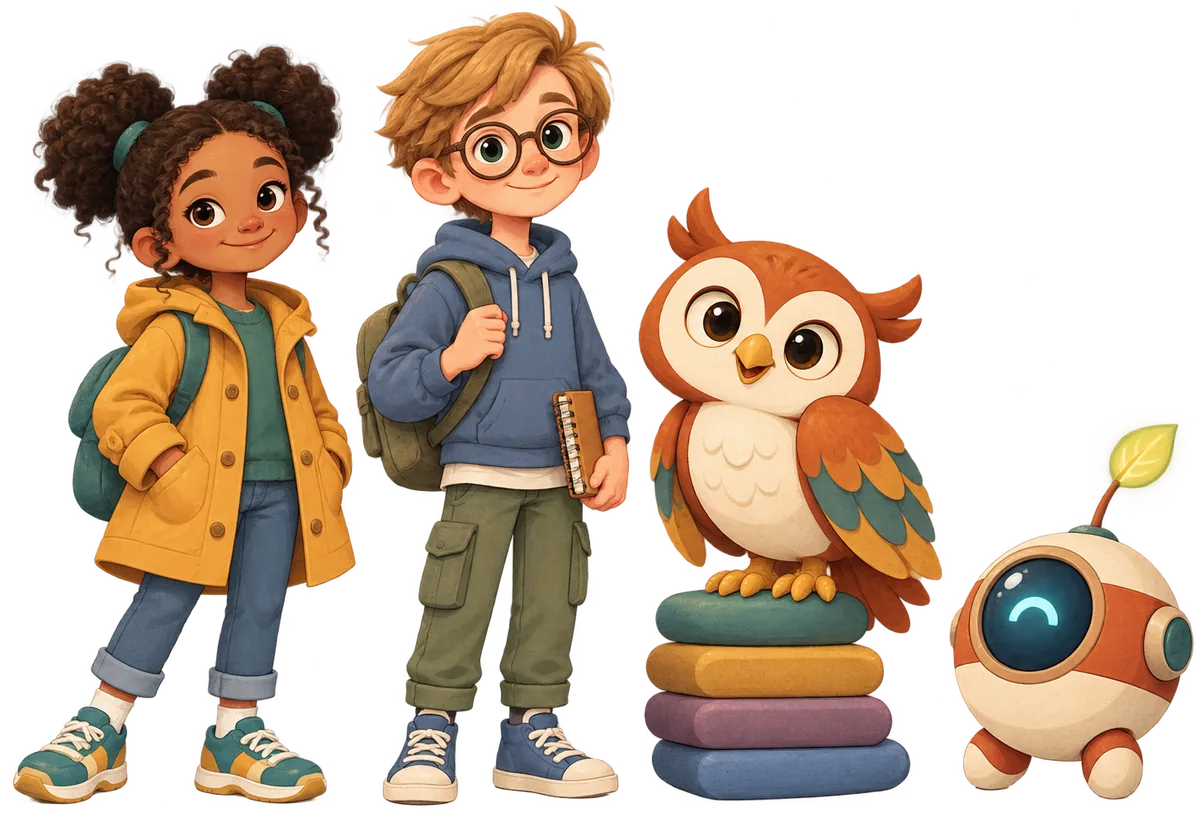
NarratorOn Monday evening, a photo pinged into Theo's class chat.
TheoNoor, look! There's a shark in our school swimming pool!
NoorA shark? Wearing swimming goggles? But why would a shark need goggles?

PipBeep! A goggle shark! It must be true. It's a photo!
TheoI'm telling everyone. Swimming is cancelled forever!
OwlHoo! Let's pause first. Some pictures are made by AI, and they can look very real.
OwlLet's be detectives. We look for clues. Then we ask a grown-up.
NoorThe letters on the pool sign look all melted!
TheoAnd the lifeguard has six fingers. Hmm.
OwlGood spotting. Clues like these can mean a picture is fake.

Noor's mumI asked the teacher. Someone made it with an AI picture tool, as a joke.
PipOops. I believed it because it looked real. Next time I'll check!
TheoPhew. Swimming is back on. No sharks allowed.
Look for clues
AI tools can make pictures that never happened. A picture like that is a fake.
Fakes often have small mistakes. We call these clues. A clue is a small thing that helps you work something out.
Look at hands, writing, and shadows. AI often gets these a bit wrong.
But careful! Not every odd thing is a clue. Real photos can be blurry or strange too.
Odd hands, melted letters, and wrong shadows can be clues. But normal things are not clues.
When clues don't show, ask
Here is the tricky part. Some fakes look perfect. You can't spot any clues at all.
AI can also copy voices, and make videos that look real.
So what do you do? First, pause. Don't share it yet.
Then ask a grown-up. They can help check where it came from. Did a real news team share it, or just a stranger?
Some fakes have no clues. So pause, ask a grown-up, and check where it came from.
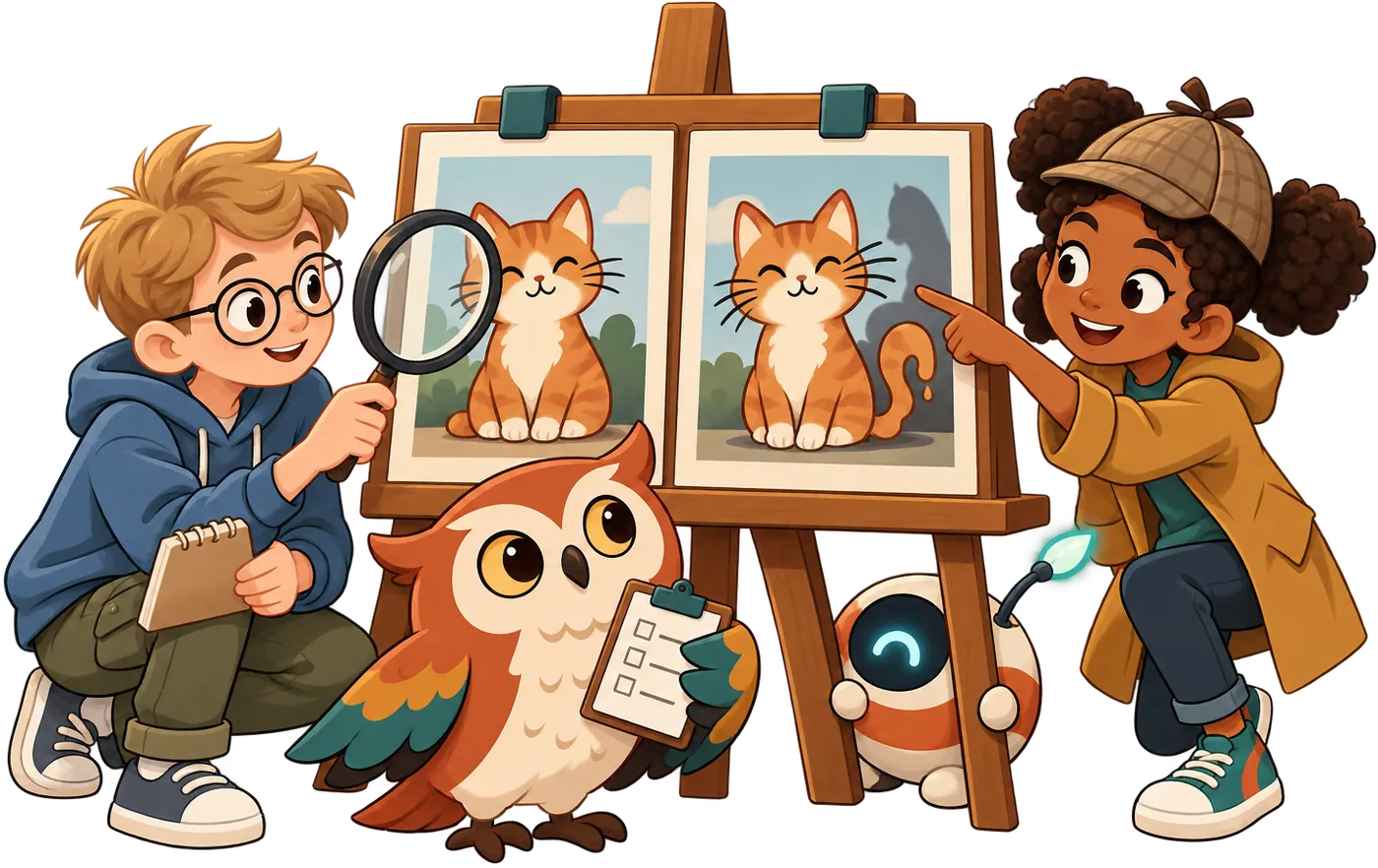
Try it: Detective notebook
Do this with a grown-up. Choose a real picture together, like one from a newspaper, a magazine, or the family photo album.
- Look at the hands. Count the fingers.
- Read any writing. Are the letters neat or melted?
- Find the light. Do the shadows go the right way?
- Ask: who made this picture, and where did it come from?
- Write down your verdict: real, fake, or not sure. Not sure is a fine answer!
If you use a real app to look at pictures, most AI tools have a minimum age (often 13 or older), so a grown-up does the typing.
Optional. Just for fun.
Check it, and earn your sticker
 Word jar
 For grown-ups
What your child learned
AI tools can make pictures, videos, and voices that look real. Sometimes there are clues (odd hands, melted writing, wrong shadows), but good fakes can have none. The safe habit is to pause, look, ask a grown-up, and check where it came from before sharing.
Talk about it
- Have you ever seen a picture or video that made you think, “is that real?” What did you do?
- Why might someone make a fake picture? Is it OK if it's just a joke?
- If a picture has no clues, how could we find out if it's real?
A five-minute activity
Look through a newspaper or magazine together for five minutes. Pick one photo and play detectives: who took it, where did it come from, and does anything look odd?
Safety notes
Fakes are getting harder to spot by eye, so the lasting skill is checking the source and asking, not hunting for glitches. Voice copies are also possible: a family code word for surprising calls or messages is a simple, calm safeguard.
If this worries your child
If your child finds fakes unsettling, keep it light and practical: most fakes are jokes, and they never have to work it out alone. Pausing and asking you is always the right move.
Curious Kids has no accounts and collects nothing: progress and stickers stay on this device. More in the grown-ups guide.