Curious Kids · Lesson 4 of 12
Asking Good Questions
Clear questions get better answers. Say what you want and who it's for.
Your device reads the story out loud.
 Sticker waiting for you
Safety tip: Be clear and kind. · Pip is a pretend AI, for practice
Story time
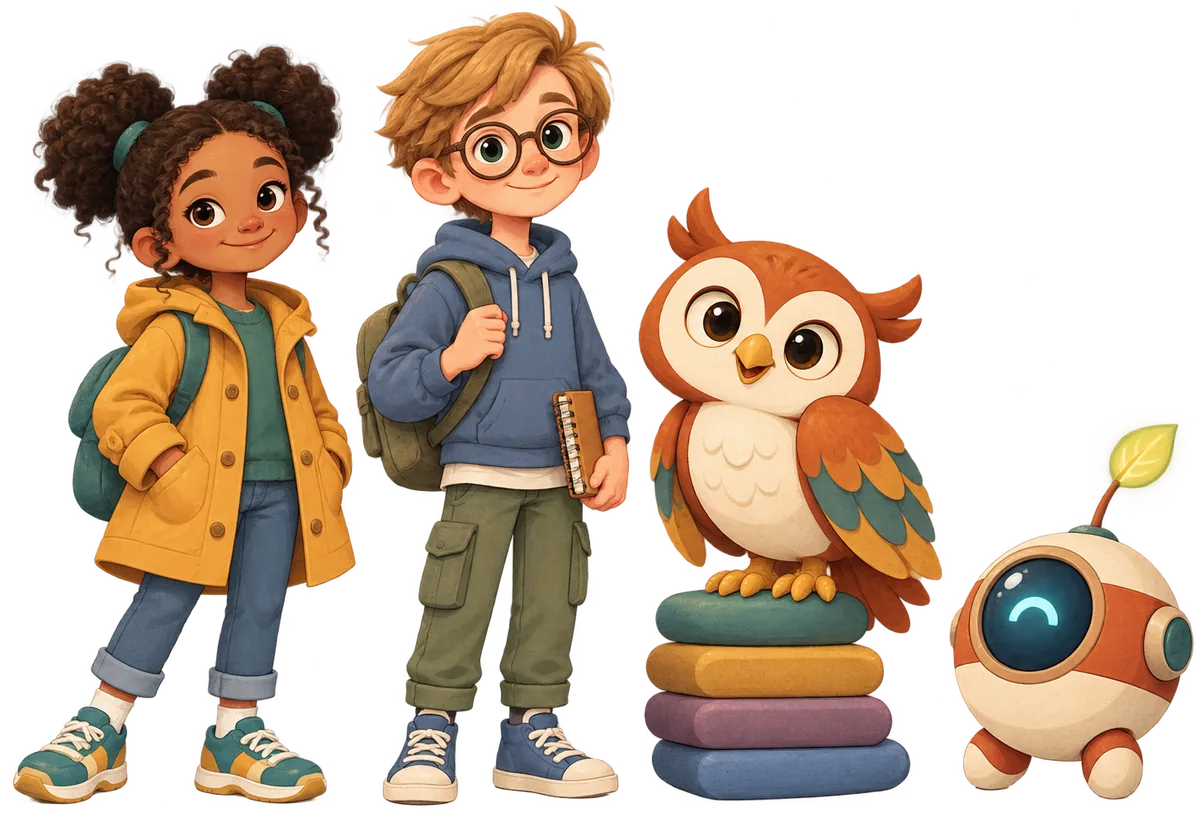
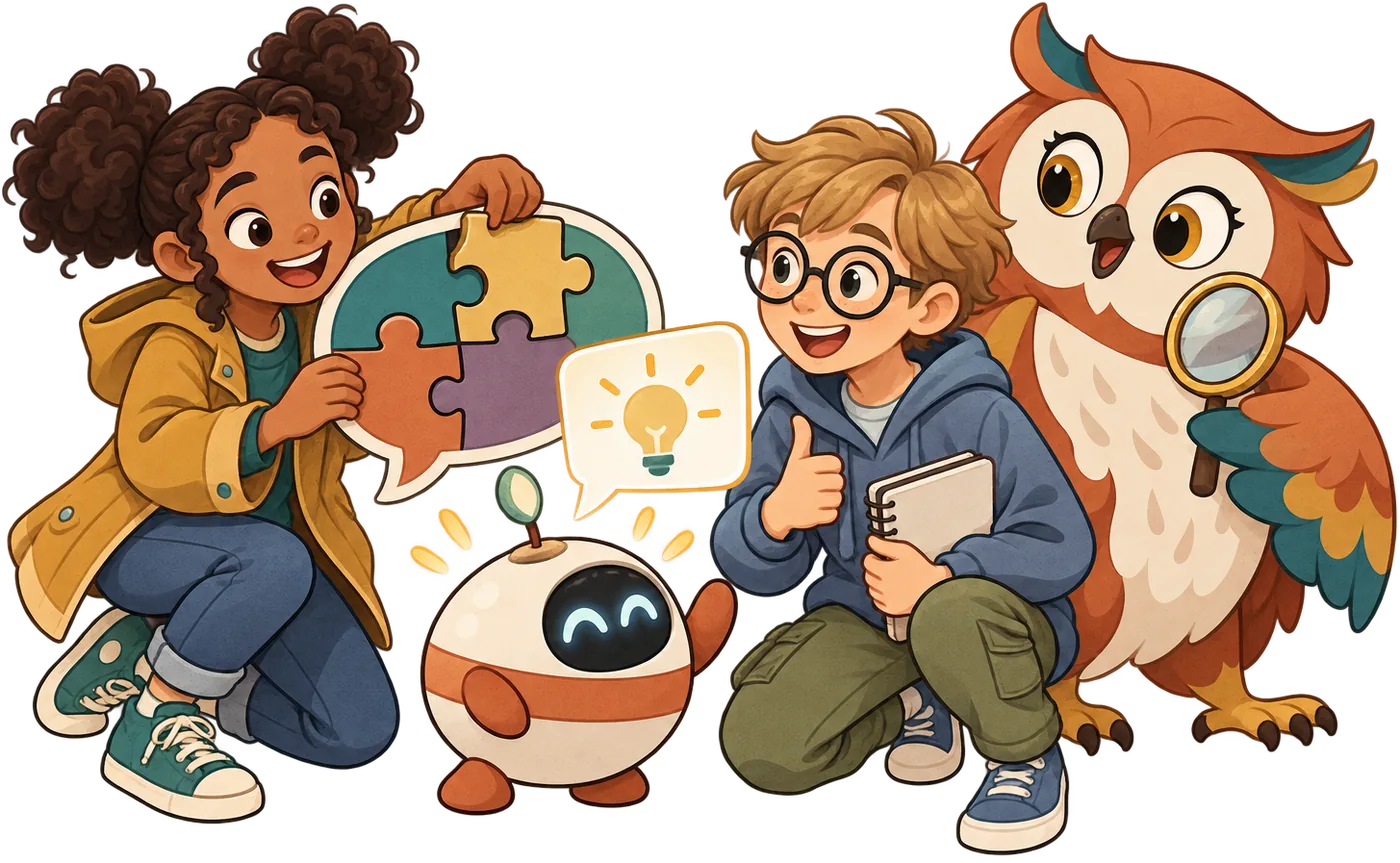
NarratorIt was nearly bedtime. Noor's little brother wanted a new story.
NoorPip, make a story!

PipBeep! Here is a story. There was a thing. It did stuff. The end.
TheoThat's the most boring story ever!
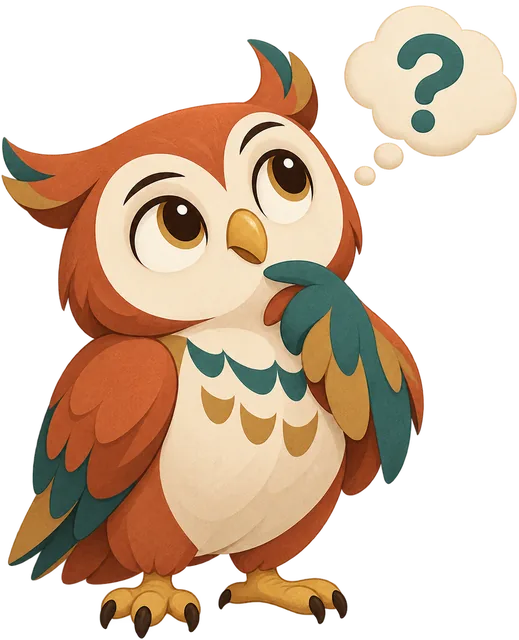
OwlHoo. Pip did what you asked. But you didn't say much.
OwlTell Pip who the story is for, what it's about, and how long it should be.
NoorBut why does Pip need all that?
OwlPip can't read your mind. And Pip is a pretend AI, for practice.
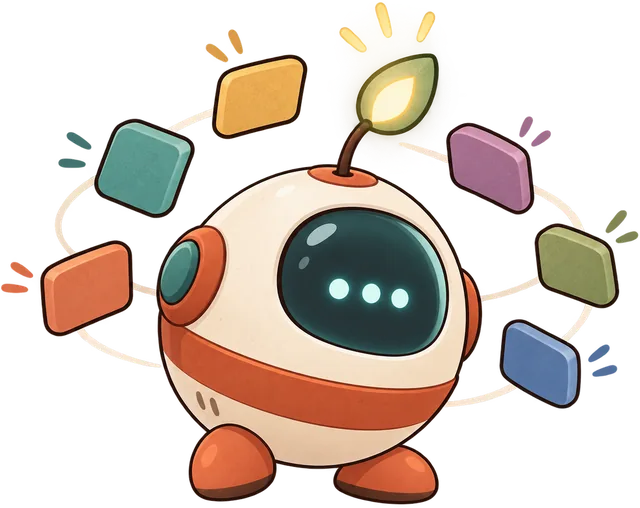
NoorPip, please tell a short bedtime story for my little brother. He's five. Make it about a sleepy dragon.
PipOnce upon a time, a little dragon was too sleepy to roar. So he just yawned a warm, cosy yawn.
NoorHe's going to love it!
OwlA clear question, asked kindly. That's how you get a great answer.
Clear questions get better answers
AI can't read your mind. It only knows the words you give it.
A clear question says exactly what you want. Clear means easy to understand.
Add a few details. Who is it for? What is it about? How long should it be?
A detail is one small piece of extra information. Details help AI guess much better.
Say who it's for, what it's about, and how long. Clear questions get better answers.
Be clear, and be kind
Match each short, vague question to its clear and kind version.
Pip is a pretend AI. It has no feelings, so it can't be upset.
But saying please and thank you is still a good habit. It keeps your words kind everywhere you go.
And one more thing: a question for a story never needs your real name or address. Keep those private.
A clear and kind question gets a great answer, and it never needs private details.
Try it: Twenty questions
No screens needed. A guessing game for two or more players. It shows how good questions help you find answers fast.
- One player thinks of an animal, a food, or an object.
- The others ask yes or no questions. You can ask up to twenty.
- Keep count. Good questions cut out lots of answers at once, like "Does it live in water?"
- Guess the answer! Then swap turns.
Talk about it after: which question helped the most? Why was it a good one?
Optional. Just for fun.
Check it, and earn your sticker
 Word jar
 For grown-ups
What your child learned
AI tools only work with the words they are given, so clear requests get better results. A good request says what you want, who it's for, and roughly how long. Kind words are a good habit, and a request never needs private details like a real name or address.
Talk about it
- What's the difference between "make a story" and a clear question? What details would you add?
- Why do you think we say please and thank you, even to a pretend AI?
- What private things should never go into a question to an AI?
A five-minute activity
Take turns giving each other a vague instruction ("draw an animal") and then a clear one ("draw a small blue fish with big eyes"). Compare the drawings and laugh at the differences.
Safety notes
This is the start of good prompting habits. The key safety point: children should never put their full name, address, school, or photos into a request, even for a story about themselves. A made-up name works just as well.
If this worries your child
If your child feels bad when an answer comes out wrong, reassure them it's normal. Everyone improves questions by trying again. A clearer question is a skill, not a test.
Curious Kids has no accounts and collects nothing: progress and stickers stay on this device. More in the grown-ups guide.