Curious Kids · Lesson 3 of 12
AI Can Be Wrong
AI can say wrong things in a very sure voice. Check important answers.
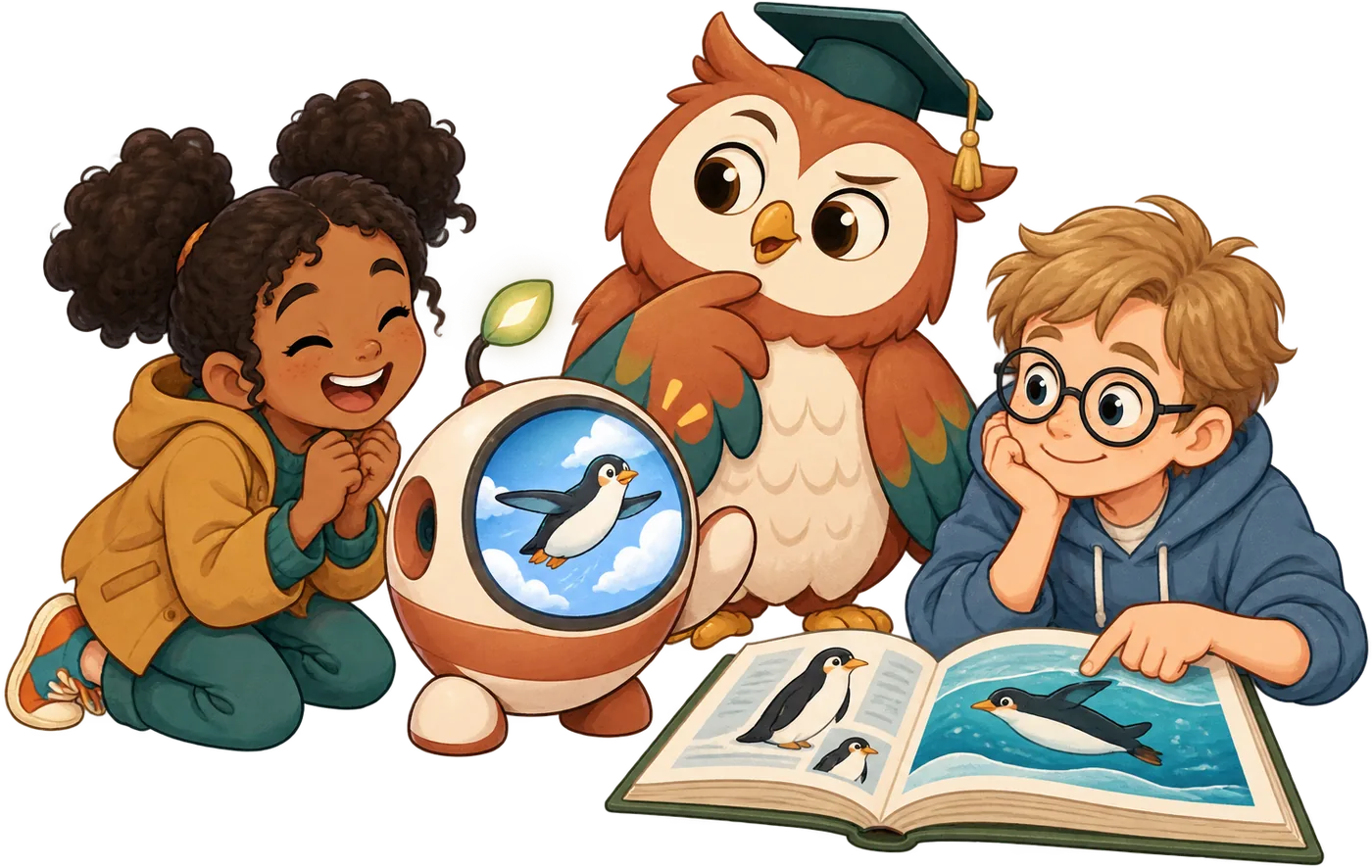
Your device reads the story out loud.
 Sticker waiting for you
Safety tip: Check with a grown-up or a good book. · Pip is a pretend AI, for practice
Story time
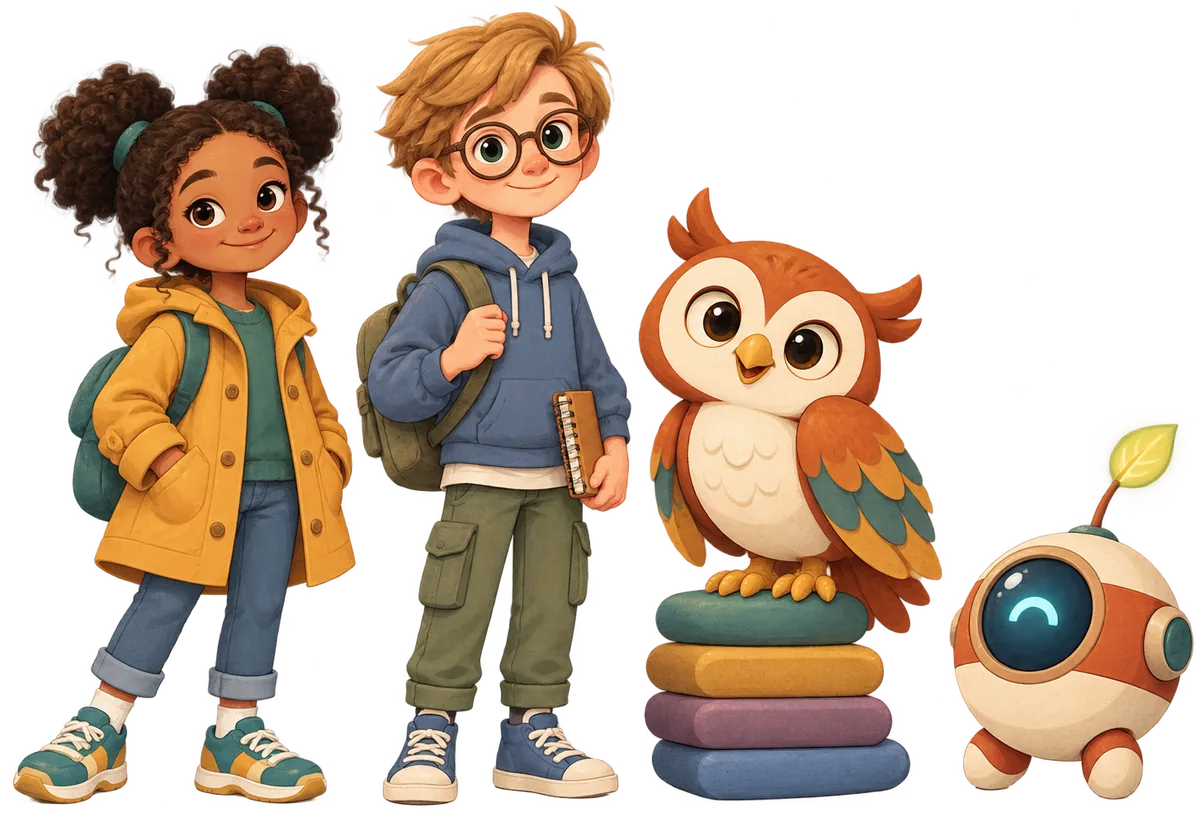
NarratorNoor had a school project about birds. She wanted one amazing fact to start it.
NoorPip, tell me something cool about penguins!

PipBeep! Easy. Penguins fly high over the sea every morning. I am totally sure!
TheoWow! I'm telling the whole football team.
NoorWait. But why have I never seen a penguin fly?
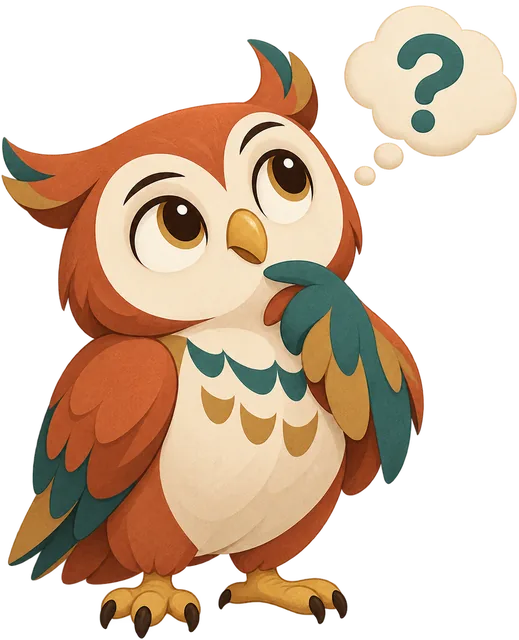
OwlHoo. Pip sounds very sure. But sounding sure is not the same as being right.
OwlPip is a pretend AI, for practice. Let's check with someone who knows. Off to the library!
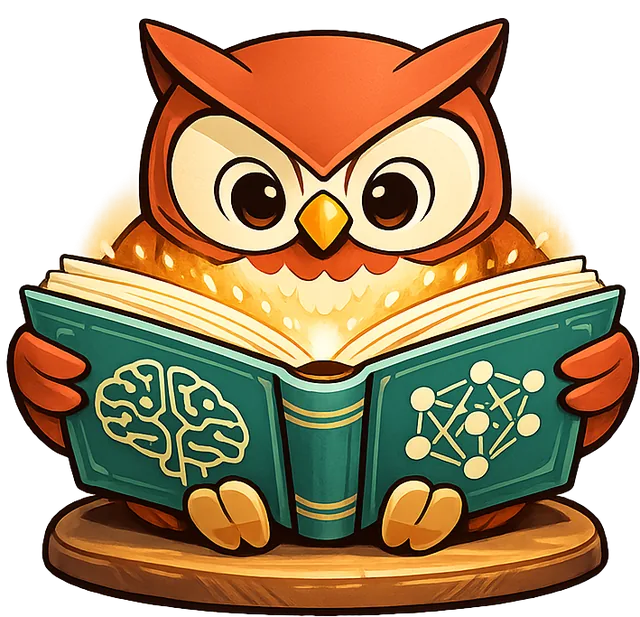
Ms AdeyemiLet's look in this bird book. Here: penguins can't fly. Their wings work like flippers.
Ms AdeyemiThey're super swimmers instead. Some can swim faster than you can ride a bike.
TheoGood thing I didn't tell the team yet!
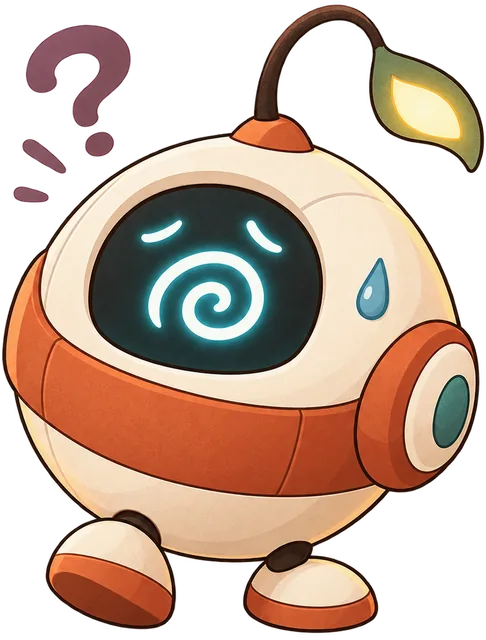
PipOops! I mixed up penguins with other birds. I sounded sure, but I was wrong.
NoorThat's OK, Pip. Now we know to check.
Sure is not the same as right
AI makes guesses. Most of the time the guesses are good. Sometimes they are wrong.
The tricky part: AI sounds just as sure when it is wrong. It doesn't say “I'm not sure” very often.
So a sure voice doesn't tell you much. You have to check the fact. A fact is something that is really true, and you can check it.
AI can sound very sure and still be wrong. Sure is not the same as right.
How to check
When an answer really matters, check it. To check means to find out if something is true.
Look in a good book, like a library book about the topic. Or ask a grown-up you trust, like a parent or a teacher.
The place where a fact comes from is called its source. A good source is one that careful people wrote or checked.
When an answer matters, check it in a good book or with a grown-up.
Try it: Check one fact two ways
Do this with a grown-up. Pick one fact and see if two different sources agree.
- Choose a fact you want to check. For example: how many legs does a spider have?
- Way one: look it up in a book at home or at the library.
- Way two: ask a grown-up what they know, and how they know it.
- Do the two sources agree? If not, what could you do next?
If your grown-up wants to try a real AI helper too, remember: most AI tools have a minimum age, often 13 or older. The grown-up does the typing, and you check the answer together.
Optional. Just for fun.
Check it, and earn your sticker
 Word jar
 For grown-ups
What your child learned
AI can give wrong answers in a confident tone, so confidence is not proof. When an answer matters, check it with a good source, such as a book or a trusted adult.
Talk about it
- Can you remember a time someone sounded sure but was wrong? How did you find out?
- What makes a book or a person a good source?
- Which answers are important enough to check, and which are fine to just enjoy?
A five-minute activity
Each of you says three “facts”, one of them made up in a very confident voice. The others guess which is the tall tale, then check one together in a book.
Safety notes
Children tend to trust confident answers from devices. Checking important information (health, safety, schoolwork) with a trusted adult or a good book is a habit worth building early. Most AI assistants have minimum ages, often 13 or older.
If this worries your child
If your child feels they can't trust anything, reassure them: most answers are fine, and checking is simply what careful people do. It's a skill, like looking both ways before crossing.
Curious Kids has no accounts and collects nothing: progress and stickers stay on this device. More in the grown-ups guide.