Curious Kids · Lesson 2 of 12
How AI Learns From Examples
AI learns by looking at lots of examples. Bad or too few examples teach it the wrong thing.
Your device reads the story out loud.
 Sticker waiting for you
Safety tip: Examples matter. · Pip is a pretend AI, for practice
Story time
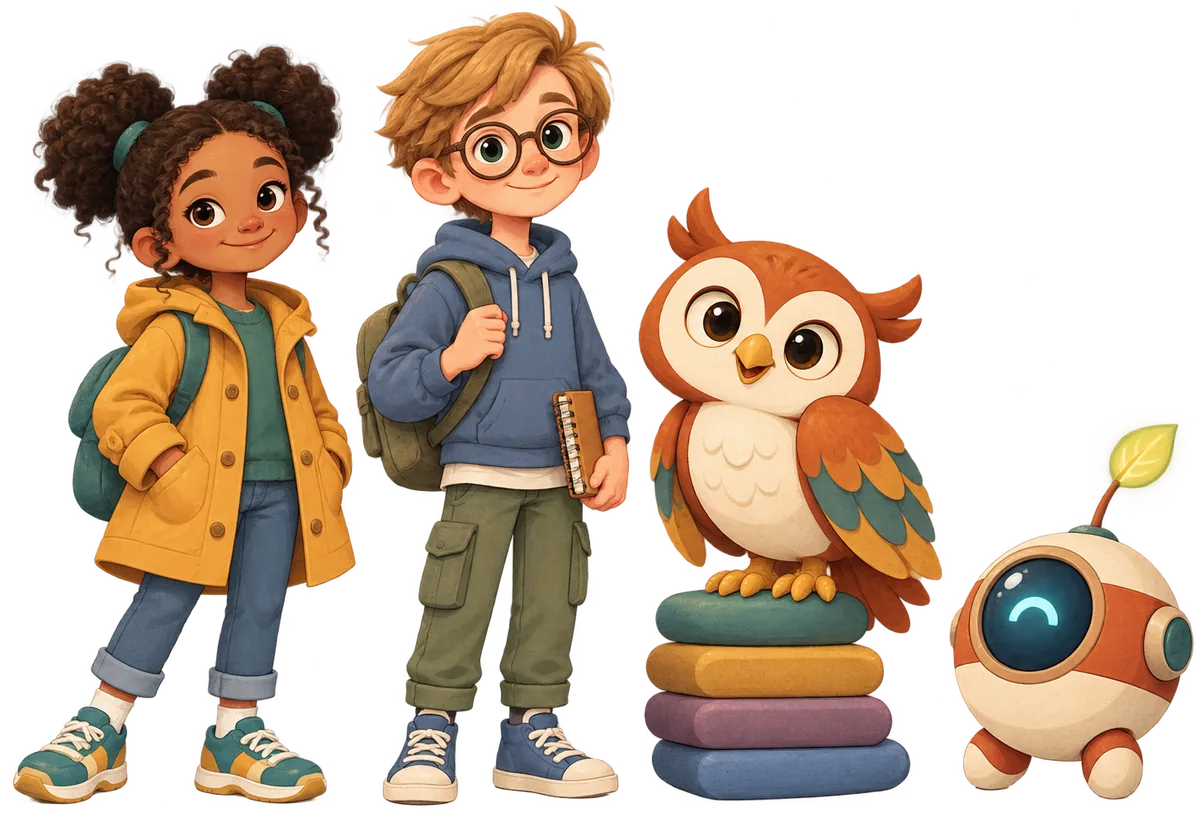
NarratorThe next Saturday, Noor and Theo were back in Grandad Joe's workshop.
TheoI've got a plan. I'm going to teach Pip to spot cats!
NoorHow do you teach a gadget anything?
TheoEasy. I'll show it lots of cat photos. Look, these are all of Ginger, Grandad's cat.
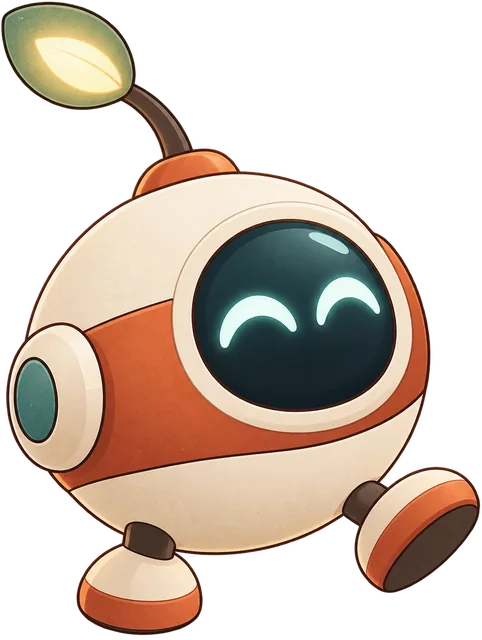
PipBeep! I have looked at every photo. I am now a cat expert!
TheoGreat. Let's test you, Pip.
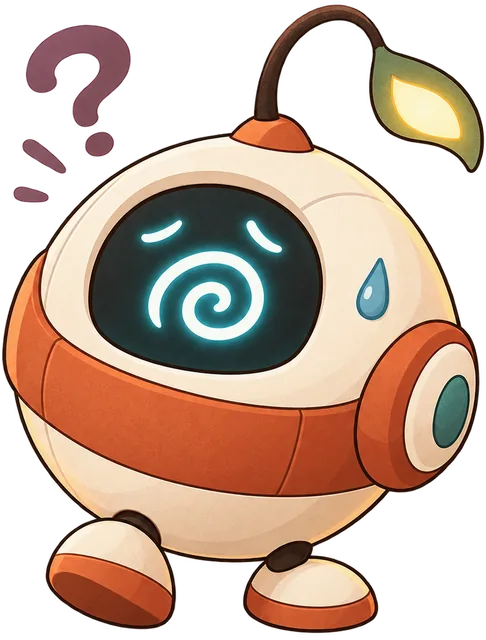
NarratorTheo held up a photo of a black cat.
PipNot a cat! Cats are orange.
NarratorThen Noor held up a photo of an orange fox.
PipA cat! It is orange and fluffy. Beep!
NoorPip, that's a fox!
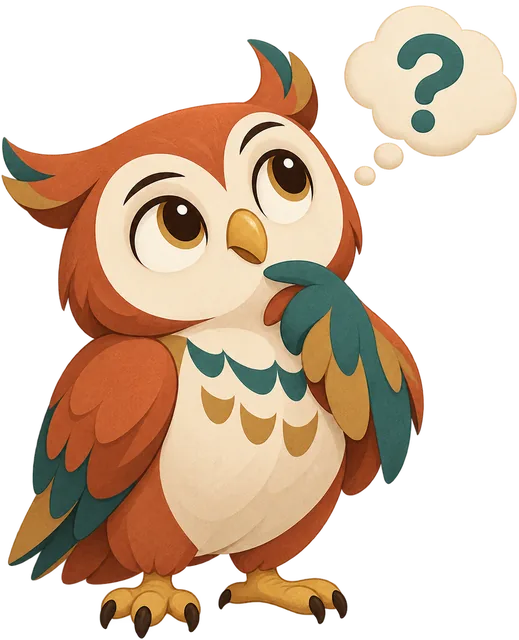
OwlHoo. Pip isn't being silly. Pip learned exactly what you showed it.
OwlEvery photo was an orange cat. So Pip thinks orange means cat.
TheoOh. So my examples taught Pip the wrong thing!
OwlLet's find out how to teach it better. Remember, Pip is a pretend AI, for practice.
AI learns from examples
An example is one thing you show to explain an idea. A photo of a cat is an example of a cat.
AI learns by looking at lots and lots of examples. It looks for a pattern: something that shows up again and again.
If all the examples are orange, the pattern AI finds is orange. That's why Pip got muddled.
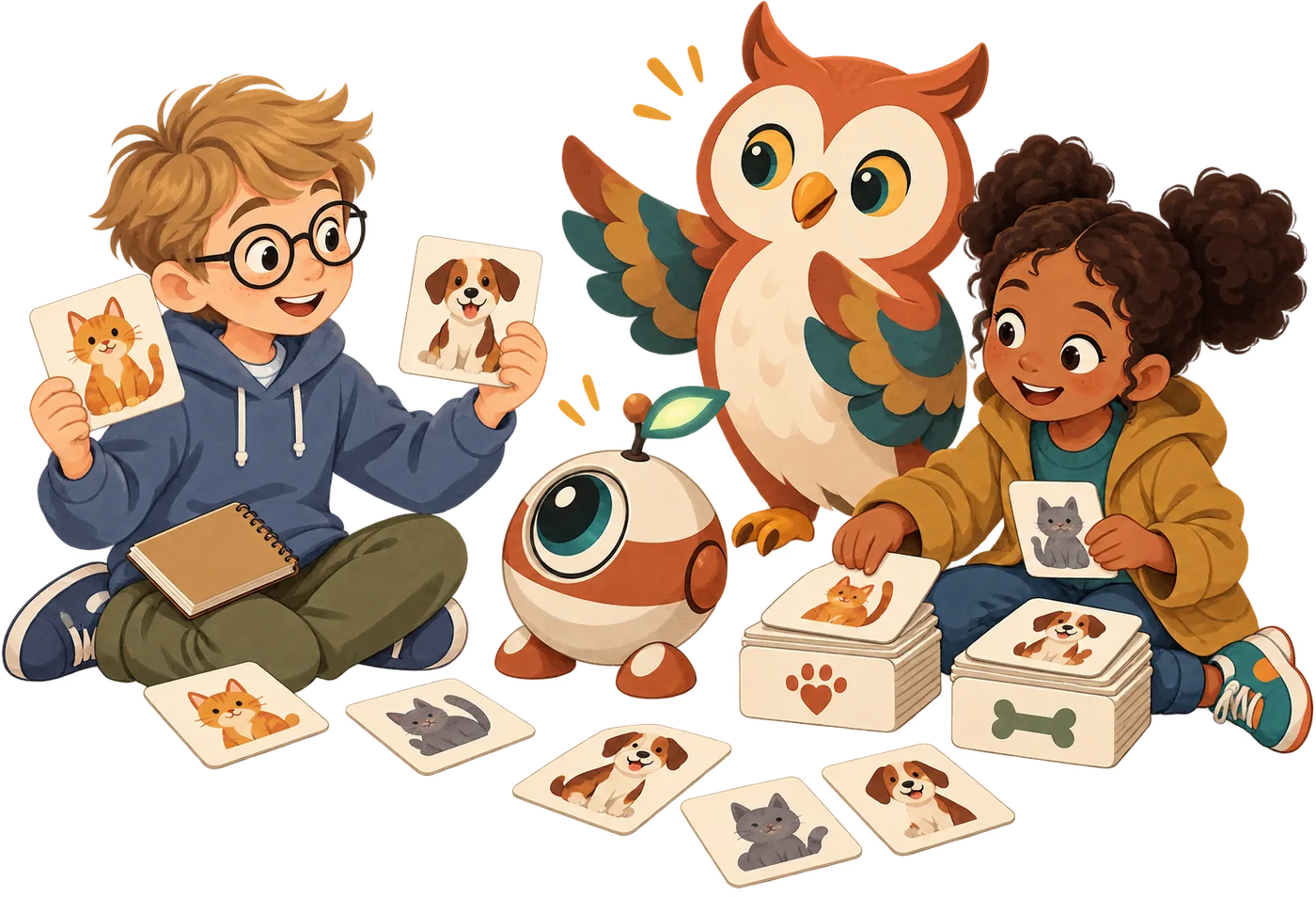
Try it yourself. Teach Pip with these examples. Then test Pip on some new pictures.
AI learns the pattern in its examples. If the examples are all alike, it learns the wrong pattern.
Better examples, better guesses
To teach Pip well, Theo needs lots of different cats. Black cats, white cats, stripy cats, big cats, tiny cats.
He also needs tricky examples that are not cats, like an orange fox. That way Pip learns that orange doesn't mean cat.
People who build real AI do the same thing. They collect examples, teach, test, and fix. Then they test again.
Can you put the steps in order?
Good AI needs lots of different examples, and lots of testing.
Try it: The secret-rule game
No screens needed. A guessing game for two or more players. You'll learn from examples, just like AI does.
- One player thinks of a secret rule, like "things that are round".
- They give examples that fit the rule: a ball, an orange, a wheel.
- They can also say things that don't fit: a book is not in the rule.
- Everyone else tries to guess the secret rule.
- Swap, and try a trickier rule!
Notice how a few examples can trick you. If all the round things were also orange, you might guess "orange things"!
Optional. Just for fun.
Check it, and earn your sticker
 Word jar
 For grown-ups
What your child learned
AI systems learn patterns from examples (training data). If the examples are too few or too alike, the system learns the wrong pattern and makes confident mistakes on things it hasn't seen, like calling a black cat "not a cat" because every example cat was orange.
Talk about it
- If you wanted to teach someone what a dog is using only photos, which photos would you choose?
- Why did Pip call the orange fox a cat? What could Theo have done differently?
- Can people learn the wrong pattern from too few examples too? Can you think of a time?
A five-minute activity
Play the secret-rule game from the lesson. Then try a sneaky round: give examples that all share an extra feature (every round thing is also red) and see if anyone falls for it.
Safety notes
This is the root of AI bias: a system is only as good as its examples. It helps children understand why AI can be unfair or wrong about people or things it saw too little of.
If this worries your child
If your child worries that AI will get things wrong about them, reassure them that people test AI and fix it, and that it's always fine to question an answer. Mistakes are a reason to check, not to be scared.
Curious Kids has no accounts and collects nothing: progress and stickers stay on this device. More in the grown-ups guide.